
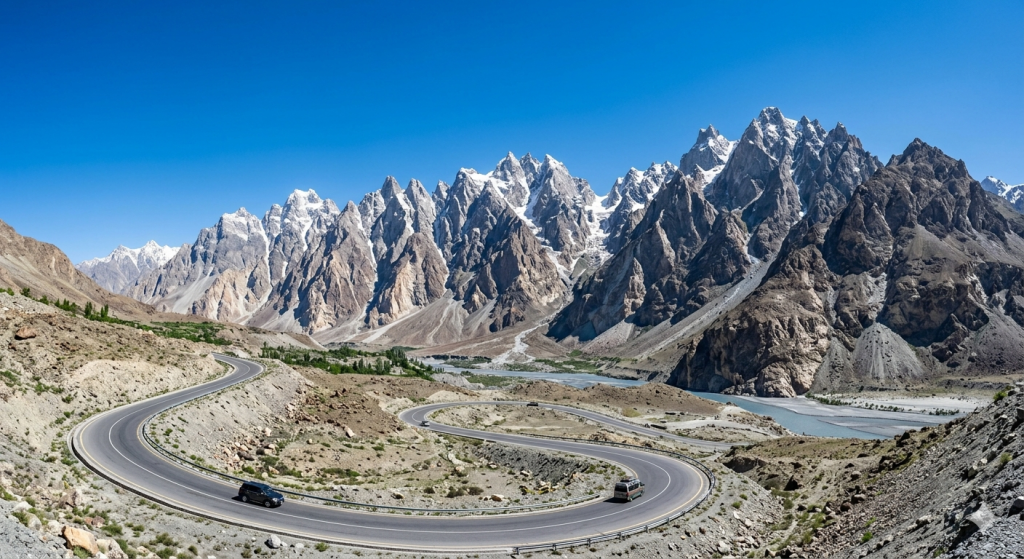
This guide is designed to help travelers navigate the rugged beauty of the Gilgit-Baltistan region. It focuses on a balanced itinerary that combines adventure, culture and relaxation.
The Route: The Karakoram Highway (KKH)
The journey begins on the Karkoram Highway, often called the “Eighth Wonder of the World.” This paved marvel connects Islamabad to the Chinese border, offering views of the world’s highest mountain ranges: the Himalayas, the Karakoram and the Hindu Kush.
Key Destinations
1. Hunza Valley (The Heart of the North)
Karimabad: Visit the historic Baltit Fort and Altit Fort. These ancient structures offer a glimpse into the life of the Mirs of Hunza.
Eagle’s Nest (Duikar): Drive up to this viewpoint at sunrise or sunset for a 360-degree view of peaks like Rakaposhi, Ladyfinger and Golden Peak.
Attabad Lake: Famous for its vibrant turquoise waters, travelers can enjoy boating or jet-skiing here. The lake was formed by a massive landslide in 2010.
2. Passu (The Majestic Cones)
Passu Cones: These jagged peaks are among the most photographed mountains in the world.
Hussaini Suspension Bridge: For the brave, walking across this old, swaying wooden bridge over the Hunza River is a rite of passage.
3. Skardu (The Gateway to Giants)
Shangrila Resort: Also known as “Heaven on Earth,” this resort surrounds the heart-shaped Lower Kachura Lake.
Deosai National Park: Known as the “Land of Giants,” this is one of the highest plateaus in the world. It’s best visited between July and September when the plains are covered in wildflowers.
Manthal Buddha Rock: A large granite rock with a carving of Buddha dating back to the 8th century, showcasing the region’s diverse history.
Practical Travel Tips
Best Time to Visit: * Spring (April–May): For cherry and apricot blossoms.
Summer (June–August): Ideal for trekking and visiting Deosai.
Autumn (October–November): To see the valleys turn golden and fiery orange.
Transport: While public transport exists, hiring a 4×4 Prado or Jeep is highly recommended for reaching remote spots like Deosai or Upper Hunza.
Connectivity: Mobile signals can be patchy. It is recommended to get a SCOM SIM card, as it provides the most reliable coverage in the northern regions.
Cultural Etiquette: The people of the North are exceptionally hospitable. Dress modestly, always ask before taking photos of locals and try the local Walnut Cake or Chapshuro (Hunza-style meat pie).
What to Pack
Sturdy hiking boots.
Layers (temperatures can drop significantly at night even in summer).
High-SPF sunscreen and sunglasses (the mountain sun is intense).
A portable power bank.


